Showing posts with label Fun Features. Show all posts

December 23, 2011

Happy Holidays from the Burke

On behalf of the Burke Museum, we would like to wish all of our Burke Blog readers a happy holiday season. How do we celebrate the holidays at the Burke? With natural history and cultural themes, of course!  Please enjoy these holiday and winter-related mini-posts from some of our writers.

"The 12 Days of Christmas Island" By Winifred Kehl

On Christmas Day in 1643, the Royal Mary sailed past an uninhabited island near Indonesia. The captain named it Christmas Island - although today, most of its 1,493 residents are Buddhist. Because humans arrived only recently to the island, many endemic plants and animals (plants and animals that are found nowhere else on Earth) survive … making the wildlife of Christmas Island rather unique.

Colored versions to come soon!

On the first day on Christmas Island, I went out and saw... the largest land-living arthropod (alternate lyrics: "a coconut crab in a palm tree")

On the second day on Christmas Island, I went out and saw... 2 endemic bats, and the largest land-living arthropod.

On the third day on Christmas Island, I went out and saw... 3 endemic birds, 2 endemic bats, and the largest land-living arthropod.

On the fourth day on Christmas Island, I went out and saw.... 4 local molluscs, 3 endemic birds, 2 endemic bats, and the largest land-living arthropod.

On the fifh day on Christmas Island, I went out and saw.... 5 whaaaaaaaaaaaale shaaaaaaaaaaaaarks...

On the sixth day on Christmas Island, I went out and saw.... 6 manta rays...

On the seventh day on Christmas Island, I went out and saw.... 7 native reptiles...

On the eighth day on Christmas Island, I went out and saw.... 8
migrating sea birds...

On the nineth day on Christmas Island, I went out and saw.... 9 native butterflies...

On the tenth day on Christmas Island, I went out and saw... 10 coral species...

On the eleventh day on Christmas Island, I went out and saw.... 11
kinds of reef fish

On the twelfth day on Christmas Island, I went out and saw....43.7
million red crabs migrating, 11 kinds of reef fish, 10 coral species, 9 native butterflies, 8 migrating sea birds, 7 native reptiles, 6 manta rays, 5 whaaaaaaaaaaaaaaaaaaale shaaaaaaaaaaarks... 4 local molluscs, 3 endemic birds, 2 endemic bats,and the largest land-living arthropoooooooooooooooood

 
"Pleistocene Epoch Haiku" by Andrea Godinez

Pleistocene Epoch
Glaciers carried loose rocks, soil
Carving Puget Sound

And another one for fun:

Seattle under
Three-thousand feet deep of ice
In the last ice age
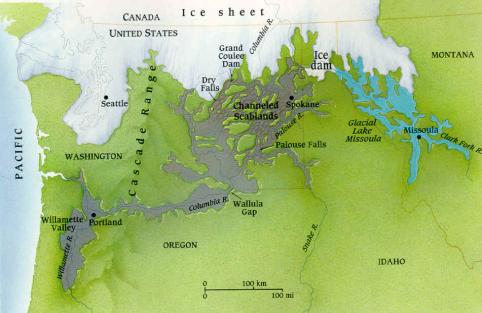

Maximum advance of ice into the Pacific Northwest. A lobe of ice has dammed the Glacial Lake Missoula in Montana. Periodically, the ice dam breached, sending the largest floods ever recorded through the channeled scablands of Washington and down through the Columbia Gorge. Image: Ice Age Floods Institute.


"Oh, the weather outside is frightful…" By Christy Hansen

The winter season is surely upon us—besides the immersion of our daily activities amid the twinkling lights of the holiday season, Seattle’s days and nights have now (statistically speaking) dipped into their coldest average temperatures for the year. With our coldest and darkest times of the year upon us, I am finding myself admittedly unprepared to bear the elements as the thermometer begins a slow dive and the chilling winds lash out at my face. Upon flipping through binders containing historic photographs depicting Alaskan Natives in the Ethnology Archives, I marvel at the content and deftness by which the Native people of the Arctic flourished in their daily activities amidst the extreme bitter weather—and immediately I am envious of the lavish and toasty winter gear handcrafted of caribou (or reindeer) and other animal skins donned by the Native Inupiat and Yup’ik peoples. Gaze upon a few choice examples from the Ethnology Archives:


Native Alaskans have been surviving in harsh and severe environments for millennia. 
Resourcefulness wasand has been strategic and a light-weight shell or parka constructed 
from the intestines of seal or walrus provides a universal waterproof protection against 
the elements for all activities. This photograph taken in the commercial photography 
studio of the Lomen Brothers of Nome, Alaska documents a Native man—either Yup’ik 
or Inupiat—wearing such a parka at some point in the first three decades of the 20th 
century. Gut skin parkas were universal all along the Alaskan coast, and were especially
useful for hunting and fishing out on the water.   
(Courtesy of the Ethnology Archives of the Burke Museum of Natural History and Culture, L-3731, 
Catalog No. A1.2/27.)

A young Yup’ik woman, captured circa 1917-1936 by the Elite Studio of Juneau, is shown wearing her traditional fur parka made of caribou, seal or other animal. The parkas with the attached hood trimmed with a ruff of Arctic fox tail, wolf or wolverine fur would protect her face from the extreme cold. Some scholars assert that the insulation derived from such time-tested skin clothing is paramount to modernized synthetic materials. (Courtesy of the Ethnology Archives of the Burke Museum of Natural History and Culture, Catalog No. A1.2/89.)

October 14, 2011

Natural History Riddles

Happy Friday! Celebrate the weekend with another fun round of…

(October edition)

How to play: Read the three riddles below and see if you can guess which Washington State person, place, cultural object, or living thing we are referring to in the riddle. Post your guesses in the comments and check back on Monday to see the answers!

Update: The answers have been posted! Scroll down to see them.

Question #1:
My young are the size of a grain of rice, but we can reach 600 pounds!
A mantle of redd-ish brown color but can change with the blink of an eye;
You can find me under the rolling waves of Puget Sound.

What am I?


Question 2:
One of the oldest tools discovered on this continent
Shares its name with early peoples of North America
Has been found with the remains of ice age animals

What am I?


Question #3:
A transportation hub
A 12,000 year old giant sloth laid beneath its grounds

Where am I?


Answers below:

Answer #1: Giant Pacific Octopus

Photo courtesy of Bachrach44.

Answer #2: Clovis Point

Photo courtesy of Andrew Waits.

Answer #3: Seatac International Airport 

Photo courtesy of Jelson25 from Wikimedia Commons 

 Posted by: Andrea Godinez, Communications


August 23, 2011

Impress Your Friends with Random Trivia, Vol. 4: Washington State Edition

It seems like these days it’s hard to find native Washingtonians living in Washington. For non-native Washingtonians residing in this state, you may find it easy to fit in to the culture of Washington with your casual attire, eco-friendly lifestyle and love of the outdoors.  But what happens when you’re at a party and the conversation turns to the natural and cultural history of our fair state? (I know.  It happens all the time.) Fear not.  You can impress your fellow party-goers with these interesting tidbits about the 42nd state in the Union. To help you become a know-it-all, the Burke Blog brings you the next installment of:


Prior to 1916 Lake Washington was 10 feet higher than present.  That was the year the Lake Washington Ship Canal (listed on the National Register of Historic Places along with the Ballard Locks), was completed, which dramatically changed the hydrology of many Seattle area wetlands resulting in the Black River to dry up. 

The Valley of the Rainforest Giants, located in the Quinault Valley, is home to some of the world’s largest trees.  Measuring over 170 feet tall and nearly 20 feet in diameter, the largest western red cedar tree (Thuja plicata) in the world calls this valley home.

At 1,486 feet deep, Lake Chelan is the third deepest lake in the United States behind Crater Lake in Oregon and Lake Tahoe in California.

The Puget Sound region experiences huge variations in rainfall thanks to our multiple rain shadow effects (the blocking of rain producing weather patterns by mountains).  Sequim lies in the rain shadow of the Olympic Mountains resulting in 10 – 15 inches of rain each year while Seattle receives 38 inches of rain annually. 

The Olympic National Park, home to Olympic marmots (Washington States’ official endemic mammal), mountain goats, and Roosevelt Elk, is designated a UNESCO World Heritage Site and an International Biosphere Reserve.

Did you already know all that?  Then you may have what it takes to win Burke Trivia Night at the College Inn Pub, which are held on the first Thursday of every month.  Can’t wait until then?  You’re in luck because the museum is hosting a special edition this Thursday, August 25 with Washington Wilderness Coalition. Test your knowledge of public lands including parks, national forests, roadless areas, wilderness, wild rivers and much more!

Posted by: Karin Moughamer, Communications 

June 17, 2011

Natural History Riddles

It’s Friday and I thought it’d be a great day for a “Fun Feature” blog.  So get ready to test your Washington State natural history knowledge with another round of…


How to play: Read the three riddles below and see if you can guess which Washington State person, place, or living thing we are referring to in the riddle. Post your guesses in the comments and check back on Monday to see the answers!
Update: Scroll down to see the answers.
 
Riddle #1:
I am named for my chubby look and loose skin
I never bite, but can “strike” with my blunt tail
Unlike many of my other slithery relatives, I prefer to go out at night.

Who am I?

Riddle #2:
Glaciers carved and feed this natural beauty
The deepest fresh water in the state
“The way through” the Northern Cascades

Where am I?

Riddle #3:
I feast on moose to mice with my family members
A true leader of the pack

Who am I?


Answers Below:

Answer #1:  Rubber Boa


Photo courtesy of Brad Moon

Answer #2:  Lake Chelan


Image: Public Domain/Bareck

Answer #3:  Gray Wolf


Lonnie, Male Gray Wolf. Photo courtesy of Julie Lawrence Studios/Wolf Haven International

Since we're on the subject of wolves, the Burke Museum's newest exhibit, Wolves and Wild Lands in the 21st Century, is open through Sept. 5.  Come to the museum before August 7 and see The Owl and the Woodpecker exhibit too!

June 03, 2011

The secrets of musuems revealed!


Ever wonder about this history of taxidermy or what goes on behind the scenes at a museum?  This summer why not explore the world of museums and pick up one of these fun, informative, and thought-provoking books.  What are some of your favorite museum reads?
“Still Life: Adventures in Taxidermy” by Melissa Milgrom (2010)
From early explorer-collected skins stuffed with sawdust and random bones, through the spectacular museum dioramas of the 1930s and the minimalist displays of today, journalist Milgrom takes us deep inside the workrooms – and into the minds, hearts, and motivation – of some of the world’s most under-appreciated artisans: taxidermists.

 “Dry Storeroom No. 1: The Secret Life of theNatural History Museum” by Richard A. Fortey (2008)
The amazing
Natural History Museum in London is the creation of painstaking research, unique people and extraordinary times.  Author Fortey describes the passions and persistence that lead to this mind-bogglingly complex edifice. 

“Rogue’s Gallery: The Secret History of the Moguls and the Money That Made the Metropolitan Museum” by Michael Gross (2009)
The Metropolitan Museum of Art boasts a gorgeous collection of fabulous works.  In this unauthorized look at the museum’s entire 130-plus years in existence, author Gross describes the motley crew that came together to put that collection together; including not only America’s wealthiest of the Gilded Age, but forgers, looters, artists and crooks. 

“The Museum Book: A Guide to Strange and Wonderful Collections” by Jan Mark (2007)
Children will be intrigued – and adults entertained – by this nicely illustrated answer to the question, “What is a museum?” Colorful and quirky samples of the world’s museums abound, amply displaying the varied history of collections.


Posted by Peg Boettcher

May 06, 2011

Natural History Riddles

It’s time again to flex your natural history knowledge with another round of…


Just like the other rounds, any Washington State person, place or living thing is fair game. Keep an eye on the Burke Blog for the answers soon!
Update: Scroll down to see the answers.

Riddle #1:
Bending wood and carving new paths,
Lending a hand to carpenters and shipwrights,
Used by peoples near and far

What am I?


Riddle #2:
We drink our food;
Flying backwards is a unique trait;
With the exception of one species, we fly south for the winter

What am I?


Riddle #3:
Don’t be fooled by my rocky exterior;
Beautiful surprises are inside

What am I?


Posted By: Andrea Barber, Communications

Answers BelowAnswer #1: Adze


Answer #2: Rufous Hummingbird


Photo Courtesy of U.S. Fish and Wildlife

Answer #3: Geode


An Amethyst Geode from the Burke's Geology collection

May 04, 2011

What does the Burke mean to you?

Many Burke fans got to weigh in on that question at the 7th annual Burke Curators Dinner held on Saturday, April 30, 2011 –where we raised over $168,000 to support the museum!  Check out the video that was shown at the dinner which highlights some of the reasons people love our museum. 


Tell us why you love the Burke!  We want to hear your story….

April 08, 2011

Museums in the Movies

People have been visiting museums for a long time, and they have been going to the movies for a long time, too. It was bound to happen sooner or later that a couple of our favorite past-times – movies and museums – shared the spotlight. 

What’s your favorite museum-themed flick, or pivotal scene? Better yet, how many non-documentary films can you list that significantly feature a museum (aside from Night in the Museum, which is too easy)? Here is a short list to get you started. (Warning: this trivia challenge may be difficult to stop, once launched!).  We'll start with the best movie filmed in the best museum!

Black Widow (1987)
A murderous woman marries rich men who mysteriously die is on the loose in Seattle.  One of her victims is the director of a museum.  Several scenes were shot in the Burke including the Burke Room (with the Tiffany windows, however those are no longer on display), the lower gallery (when the totem poles were inside) and in the exhibit shop. It is rumored that Debra Winger brought her boyfriend to the set, which at the time was Sean Penn!

Bringing Up Baby (1938)
In what other film could the “intercostal clavicle” of a brontosaurus (now called Apatosaurus) bring a scientist and a scatterbrain together? Katharine Hepburn and Cary Grant begin their romance and end the film over the enormous bone of this extinct creature.

House of Wax (1953)
A lush, gaudy screamer featuring horror-king Vincent Price. A Technicolor treat made in (gasp!) 3D.

Ghostbusters II (1989)
The Manhattan Museum of Art was the setting for the ectoplasm-drenched finale of this follow-up to blockbuster film Ghostbusters (1984). Any performance artists out there would surely develop an inferiority complex if he or she attempted to follow that dazzling act!

Russian Ark (2002)
Enveloping two centuries of Russian history in the amazing Hermitage Museum, the film itself was completed in a single, breathtakingly long take.

The Da Vinci Code (2006)
Murder in the Louvre! A 2000-year-old religious mystery with clues hidden in Leonardo’s paintings! Focal point of many passionate disagreements amongst friends, Dan Brown’s thriller is nothing if not controversial.

Vote for your favorite museum movie and see how your choice stacked up against others.


What is your favorite museum movie?

P.S. See Smithsonian.com’s list of five.

Posted by: Peg Boettcher

March 30, 2011

Impress Your Friends with Random Trivia, Vol. 3

Some people know a lot about a little, others know a little about a lot. We need both types of people; without the experts, we wouldn’t gain any new knowledge, and without the know-it-alls, we wouldn’t have anyone to roll our eyes at.

To help you become a know-it-all, the Burke Blog brings you the next installment of our monthly feature:

Know a little about a lot:
  • Recently, a new species of dinosaur was described by British scientists. The dinosaur was named Brontomerus, which translates to “thunder thighs” after its enormously powerful thigh muscles (and you thought being called “thunder thighs” was an insult!).
  • The earliest evidence of a human presence in North America comes from a site in Paisley, Oregon, where archaeologists identified fossilized human poop that date to 14,100 years ago.
  • It’s cherry blossom season! In Japan, a traditional custom known as hanami often involves having an outdoor party to enjoy the beauty of the cherry blossom flowers (this sounds like a good idea – after you impress your friends with random trivia, maybe they will come to an outdoor flower appreciation party that you host).
  • Fish that migrate from salt water to spawn in fresh water (like salmon) are known as anadromous. Fish that migrate from fresh water to spawn in salt water (like some eels), are known as catadromous. [Saying "anadromous catadromous" ten times fast will make you dizzy.]
  • Eusociality is a social system exhibited by bees, termites and other insects, in which hierarchical colonies are ruled by one queen, who is the only female that breeds, and other members of the colony serve as soldiers or workers. The only mammal species with eusocial behavior is the naked mole rat.
So now you know. And now you can impress people you meet by telling them something cool that they didn’t know. But please, be careful with your approach:


Posted by: Julia Swan

March 24, 2011

Fundraising T-Rex Grants First Interview

After receiving positive feedback about my interview with Frank the Freight Elevator, I started to think about other interesting characters at the Burke who might be willing to chat with me about their contribution to keeping this place running smoothly. I found a willing candidate in Margot the Fundraising T-Rex and while I was working at the admission desk this past Monday, I called her over for a short sit-down with me.

Margot the Fundraising T-Rex
Sam the Receptionist: Thank you, Margot, for setting aside part of your busy day to tell us about your experience at the Burke.
Margot the Fundraising T-Rex: No problem, Sam. I love talking about the work I do here and am overjoyed at the chance to explain what I do to your blog readers.

S: It is my pleasure. So how long have you been working in Development at the Burke?
M: Well, I’ve been around the Museum for quite a while, but I’ve only been in my current position for about 9 months. I really enjoy what I do here! Although some might think I’m rather stiff, I get to see so many people everyday walk around the lobby with wide eyes and curiosity all over their face. Each week there are so many students that come through. Our Educators work really hard to corral so many youngins every day. Sometimes there are upwards of 60 enthusiastic elementary school children in one tour. I love days like that when there are so many busy bodies of energy exploring the Burke for the first time!

Me and Margot!

S: Do you usually get to interact with the kids on days like that?
M: Sometimes I do. Children are usually the ones that notice me first so I get to say “hi” and show them my giant quarter. But some of the time they don’t notice me at all which makes me a little sad, but I know it’s because they’re so eager to discover all that the Burke has to offer.

S: What is your favorite part of working here at the Museum?
M: It has to be when people fill my little Plexiglas office with donations. I love it because it means that they really enjoyed their time here and they value the institution enough to put even a little bit of money back into the Museum. It doesn’t even matter to me how much people give, it’s the act of giving itself that makes me giddy.

S: Does it annoy you when kids try and aim for your head with quarters?
M: Nope, not at all. When I was in college I played soccer and having quarters aimed at my head is as close as I get to hitting headers anymore.

S: Well, Margot, thank you for taking the time out of your day to tell our readers about your job!
M: Anytime, Sam, anytime.

With whom should I seek my next interview? Cast your vote!


Posted by: Sam Porter

March 16, 2011

Natural History Riddles

It's time for another round of:

How to play: Read the three riddles below and see if you can guess which Washington State person, place, or living thing we are referring to in the riddle. Post your guesses in the comments and check back Friday to see if you were right!
Update: Scroll down to see the answers!

Riddle #1:
If water enters into your boat
Helps paddlers of the Puget Sound
Stay afloat

What am I?

Riddle #2:
A ”stately” fossil
Large molars helped grind grass
During the iciest of ages

Who am I?

Riddle #3:
Drumming away for mates and food
An acrobatic feathered friend
The smallest one in Washington

Who am I?

ANSWERS BELOW

Answer #1: Canoe bailer

Canoe bailer (Tulalip), Burke ethnology collection, #1-10709

Answer #2: Columbian Mammoth
Columbian Mammoth tusk, discovered near Ridgefield, WA

Answer #3: Downy Woodpecker

Photo courtesy Seattle Audubon
Posted by: Andrea Barber

AddThis